
Use and celebrate the home language together.
It happens quite often in bilingual families: children slowly start preferring the school language, and the home language is spoken less and less. The book Keeping the Language Alive offers 75 ways to encourage your child to keep using their home language. It's a well-designed collection of activities, projects, rituals, and habits, all helping to make your home language more present and relevant.
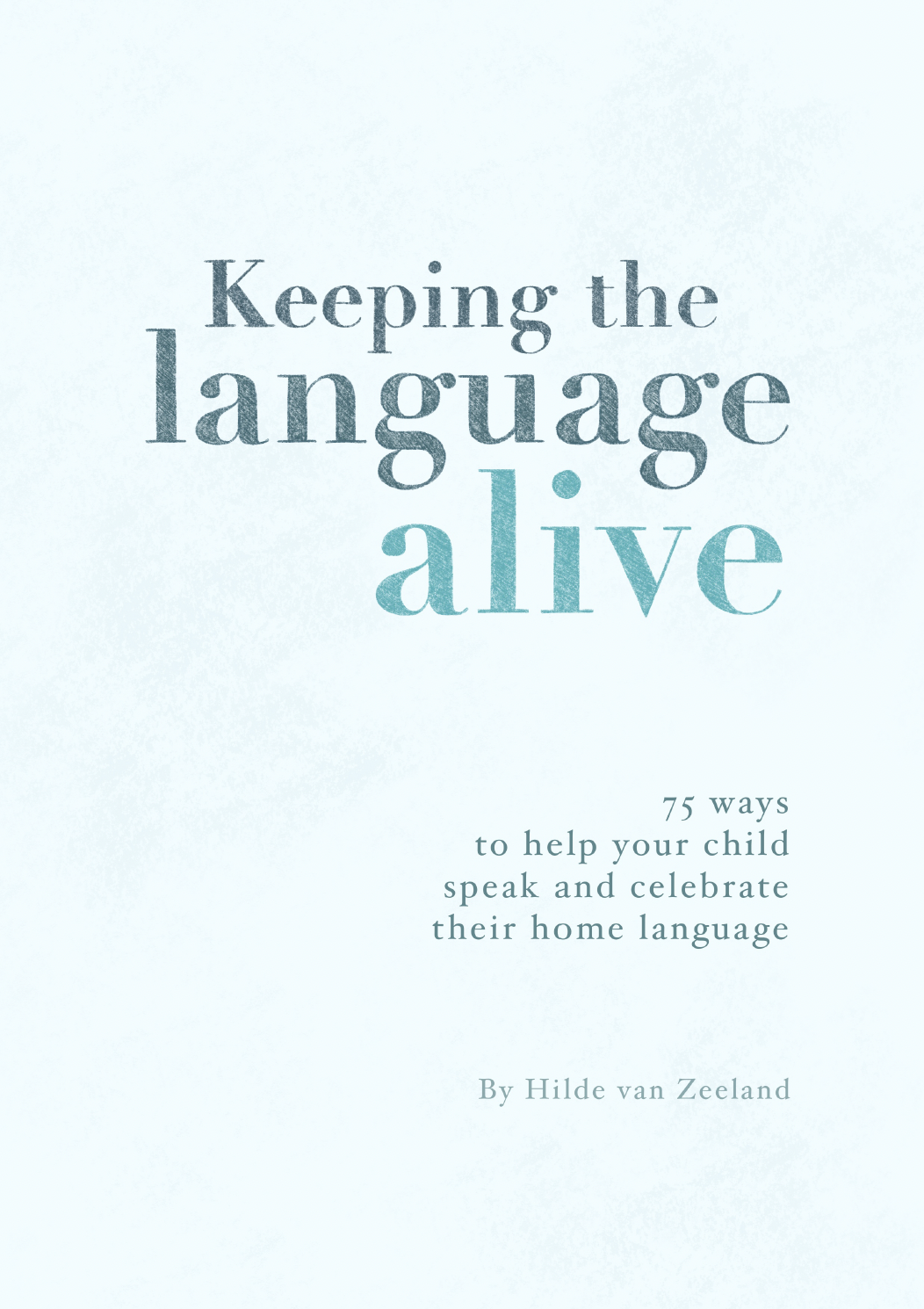
Keeping the Language Alive
Keeping the Language Alive
75 ways to help your child speak and celebrate their home language
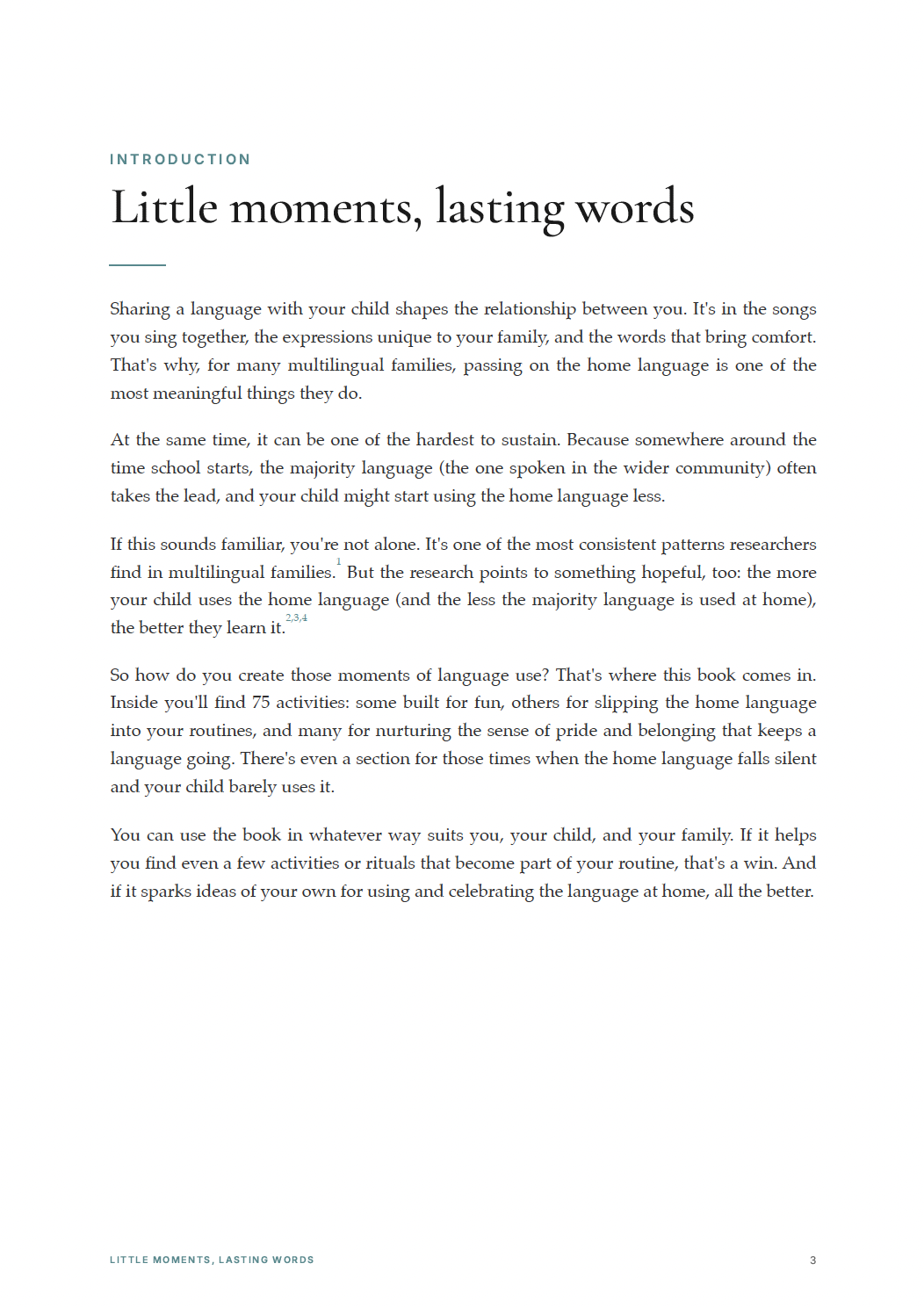
We know from research that children are more likely to learn their home language well if they speak it more often. We also know that it helps when children feel motivated and connected to their home language. This is why this book offers not just language-based activities (like role play and storytelling games), but also rituals, habits, and projects that make the language more visible in your home and present in your family's daily life.
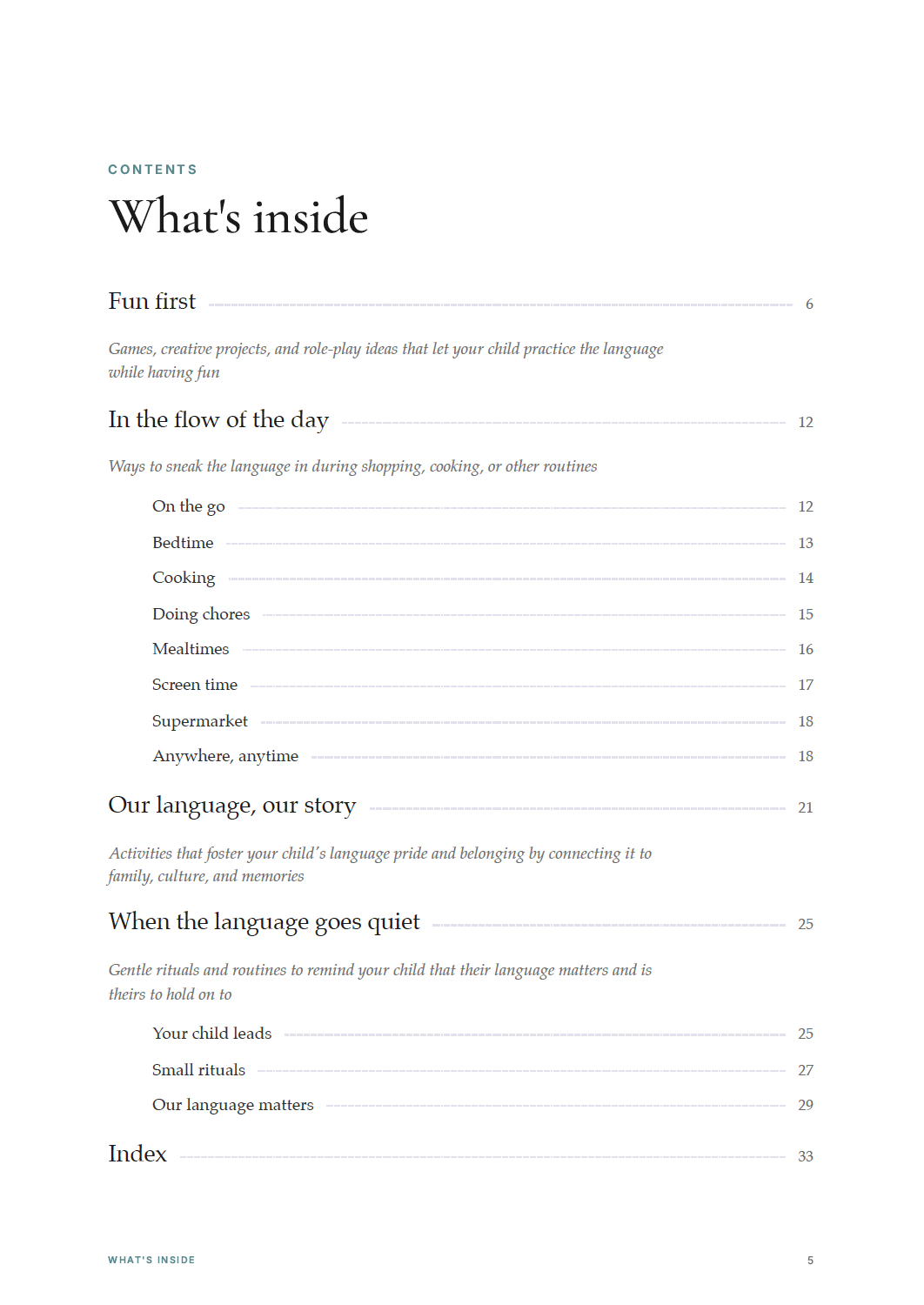
It covers four sections:
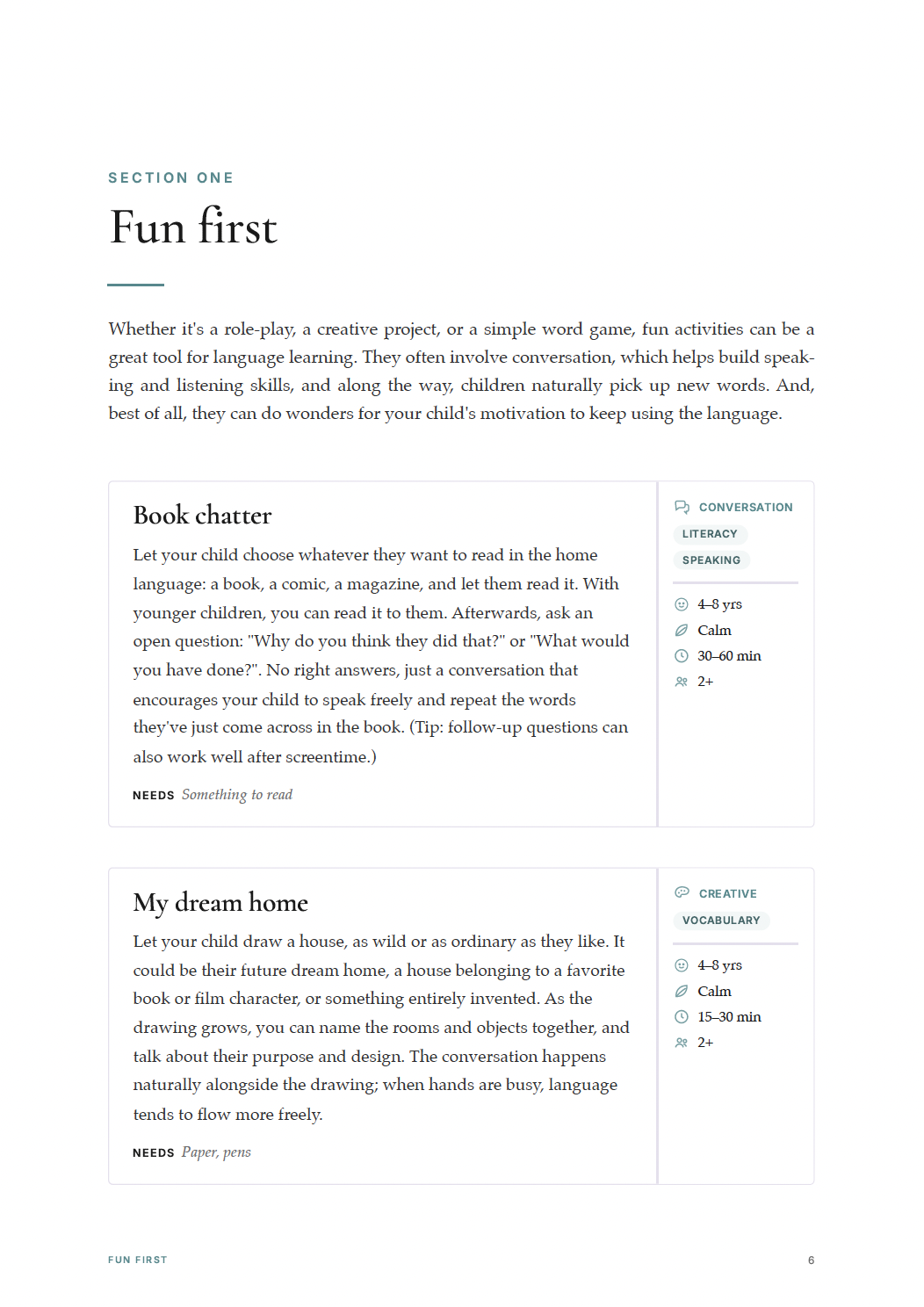
- Fun first: games, creative projects, and role-play, where children build speaking and listening skills almost without noticing, and stay motivated to keep going.
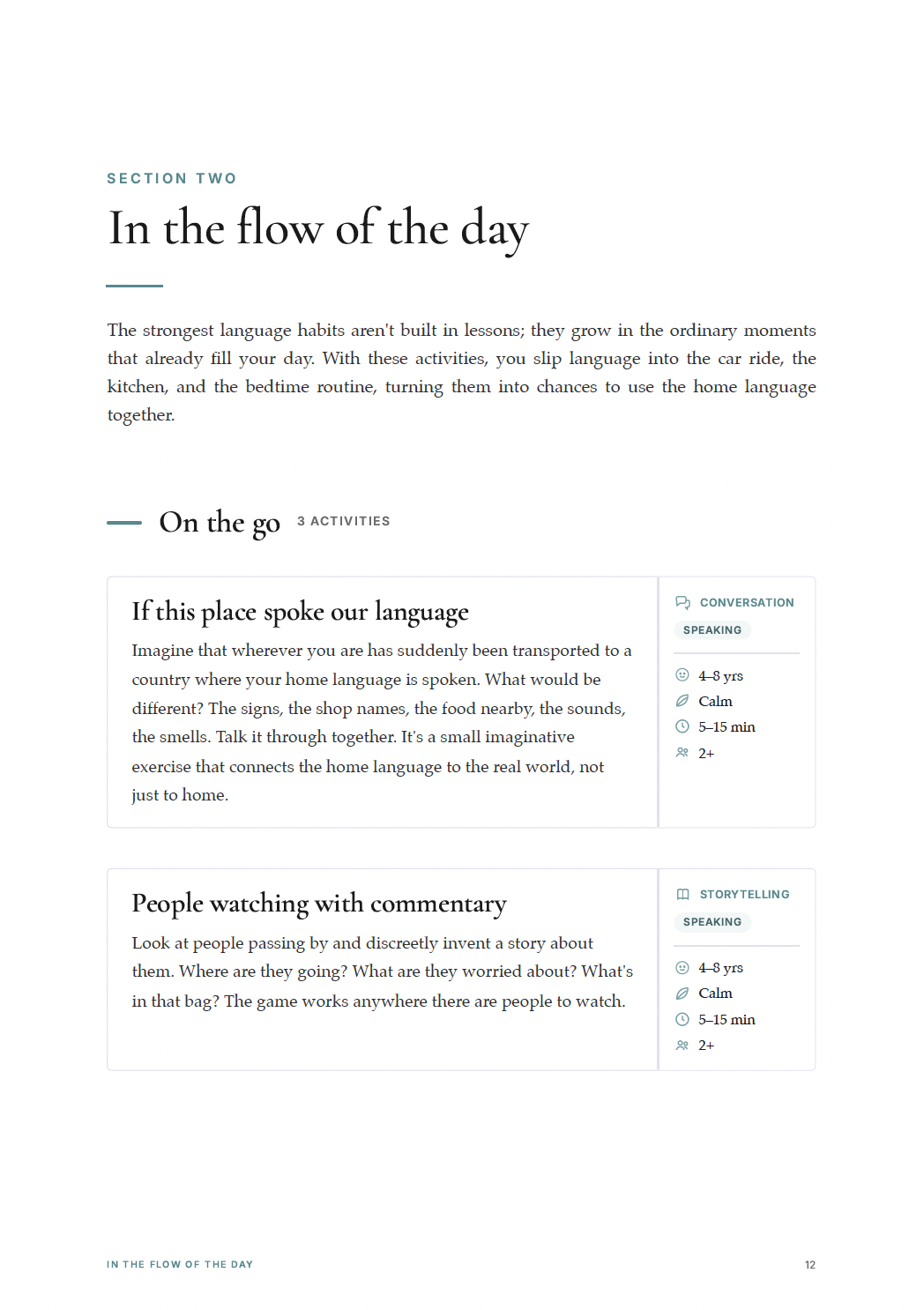
- In the flow of the day: ways to slip the language into the routines you already have: shopping, cooking, chores, screen time, the drive, the bedtime wind-down.
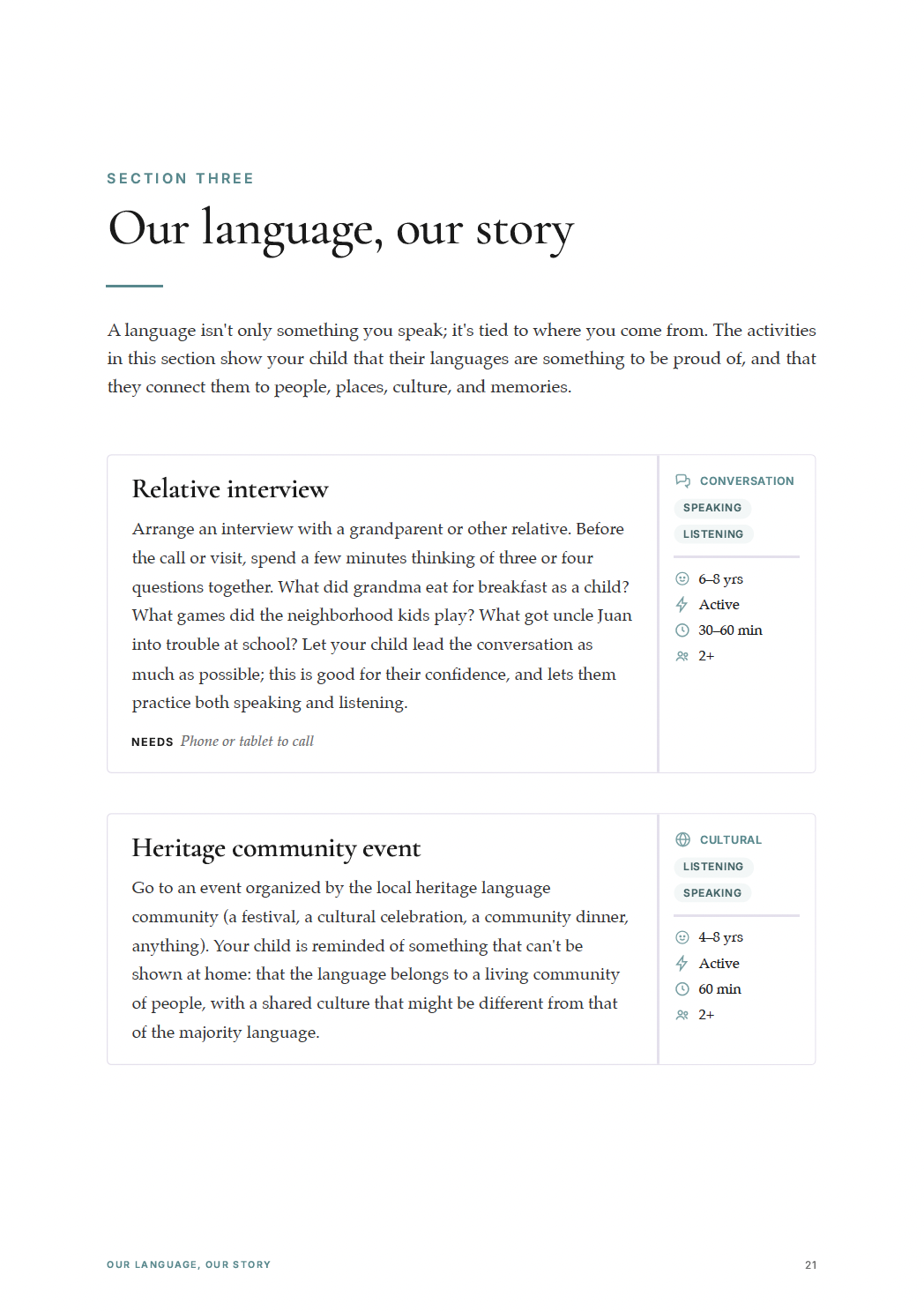
- Our language, our story: activities that connect the language to family, culture, and memory, so your child feels it's a part of who they are and something to be proud of.
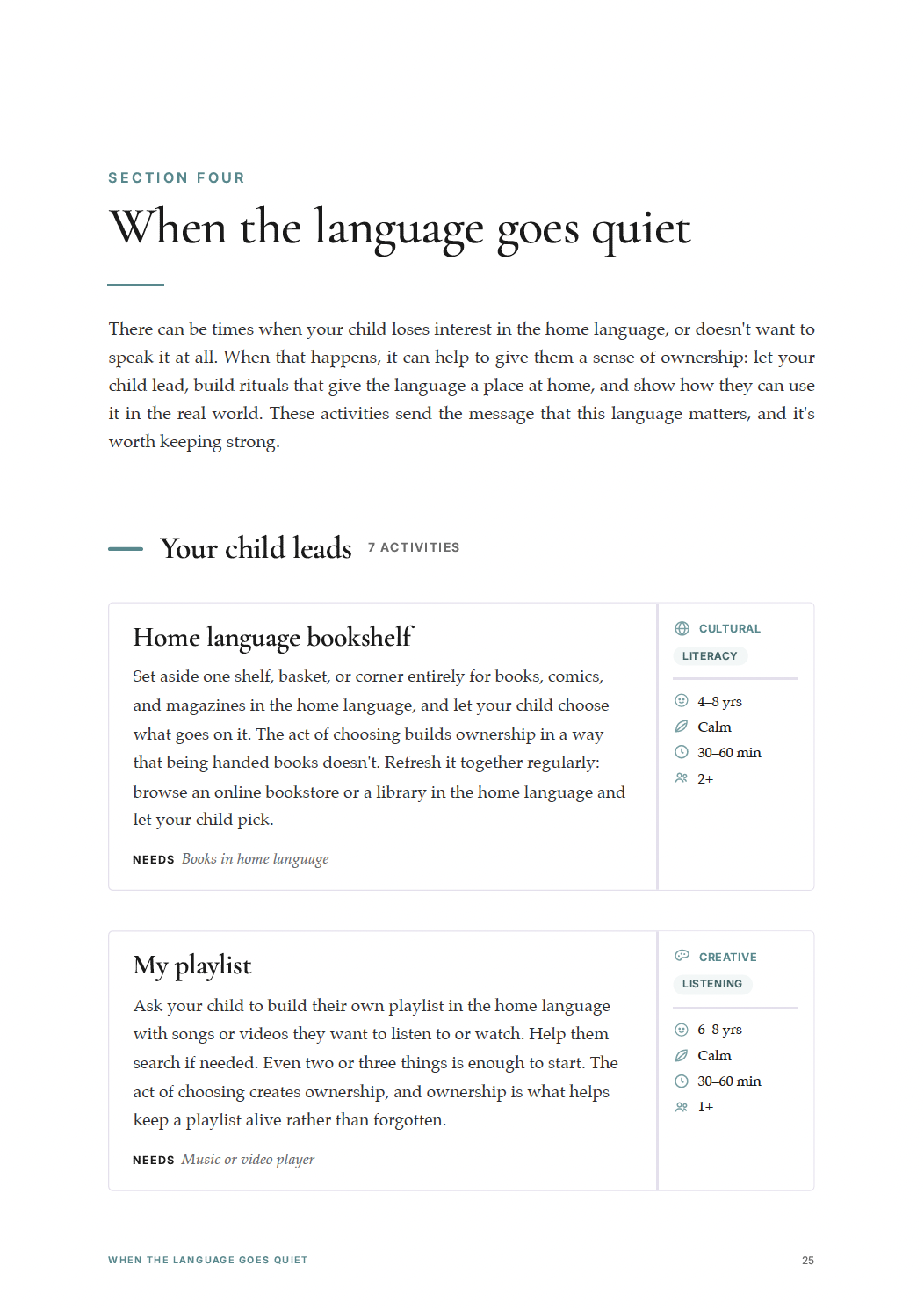
- When the language goes quiet: gentle ideas for the harder seasons, when your child loses interest or won't speak it at all: handing them ownership, building small rituals, and showing that their language has real purpose.
€15 excl. VAT
More than a simple activity book
Beyond language games
This book goes beyond fun ways to practice the language. By offering habits, rituals, and creative projects, it blends the language into your routines and gives it a more visible place in your home.
Language pride and identity
Your child is less likely to keep speaking a language if they don't see its value. That's why most of the ideas in this book were developed to help your child appreciate their home language.
Grounded in research
Created by a linguistic researcher, the book draws on evidence-based strategies that we know help language learning, and that motivate children to keep speaking.
When the language goes quiet
The book offers an entire section for those times when your child stops speaking the home language. It's about giving your child ownership, and gently showing that the language is theirs to keep.
For any language
The book is written in English, but you don't need to use the wording directly. You can take the ideas and share them with your child in your own language.
Structured for easy use
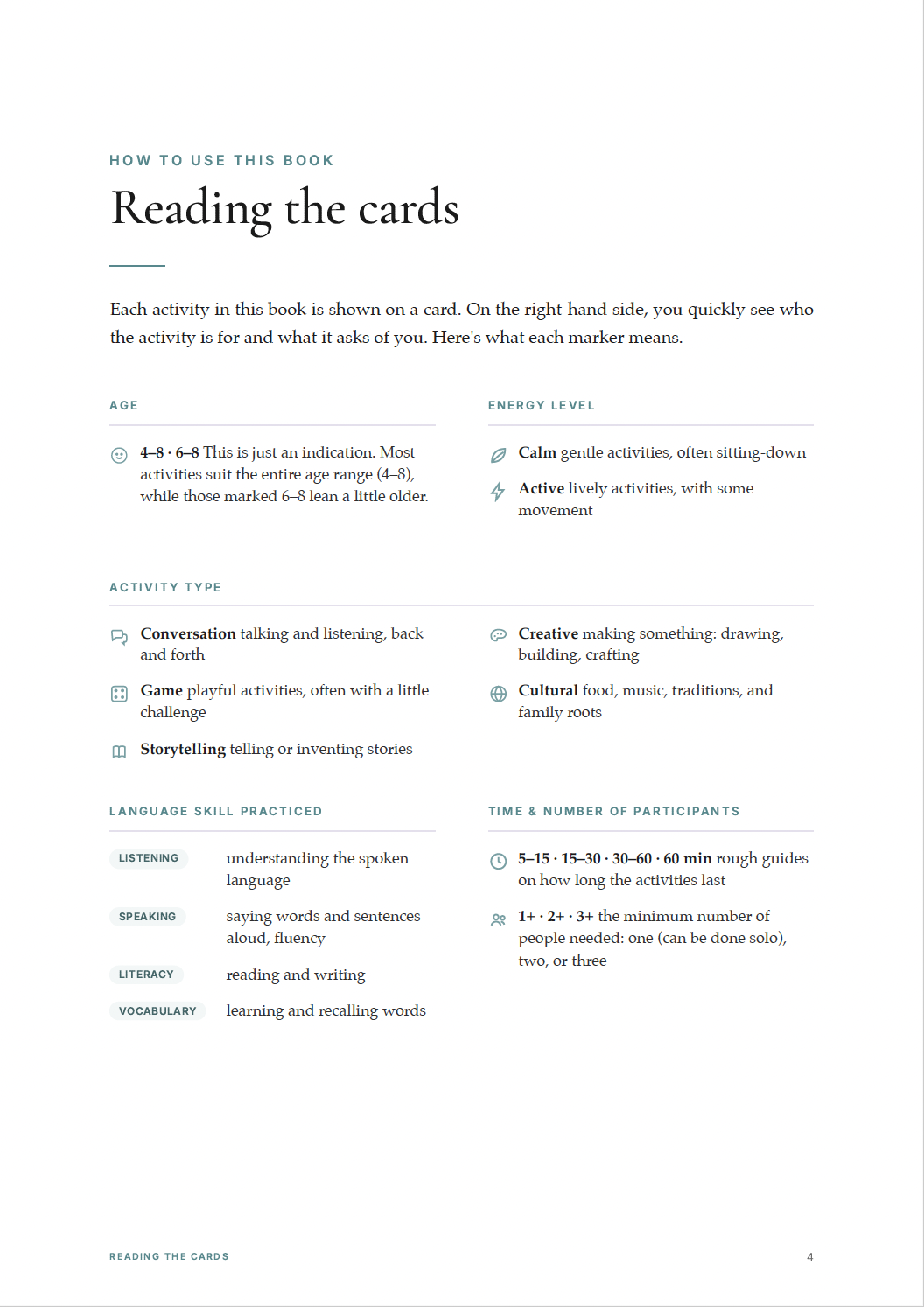
Each activity shows what language skills it helps with, who can participate (age, number of people), and what moment it's best for (activity type, duration, energy level).