
What makes language input rich for learning? What the research on bilingualism says
When it comes to children learning languages, there’s a misconception that “kids are like sponges”: as long as they hear a language, they’ll learn it. This isn’t the case. Sure, they might learn to distinguish sounds or say basic things. But in most cases, if the language isn’t directed at the child and there’s no need for them to use it, it’s unlikely they will become fluent speakers. Because how would they, if they never get to speak?
In an earlier post, I explained how research has debunked the 30% rule of input. While it’s true that children need a certain amount of exposure to learn a language, it is just as (or maybe even more) important that the input they get is rich for learning. Below, I’m giving some research-based tips on how to maximize your child’s language learning through exposure.
1. Make the language interactive
We know from research that “children learn more of a language when it is directed at them” [1]. This means that actively talking with your child and expecting a response is better for learning than having them listen to you, or having them watch something. You can also look for this outside the home by organizing playdates with other children speaking the language, visiting community events, or (video-)calling with family.
2. Look for a variety of inputs (different speakers, media, activities, modalities)
If the language is mostly used in the same situations every day, it will be quite repetitive. You’ll likely have simple, day-to-day interactions that repeat functional phrases like “It’s time to go” or “Put on your coat”. Try making the language input richer by adding variety. You could vary with:
- Speakers: a grandparent, family friend, or nanny will each expose your child to different words, tempos, accents, and topics.
- Media: music or podcasts can cover topic-related vocabulary that your child wouldn’t normally be exposed to at home.
- Activities: reading aloud, roleplay, or storytelling games can offer very rich language use.
- Language mode: written and spoken language are quite different in nature. If you can offer a mix of both (for instance, books and conversation), your child learns the language of both worlds. A plus is that literacy stimulates further learning: children who read or write in the home language are more likely to stay active bilinguals later in life [2].
3. Mirror the school language at home
Studies have shown that kids often become more proficient in the school language while their proficiency in the home language stalls or even drops [3]. This isn’t surprising: at school, they learn new concepts, together with the vocabulary and grammar needed to talk about them, while the language level at home often plateaus. Try to see what your child learns at school and, as far as you can, mirror the topics and skills using the home language. Did your child learn about volcanoes? Discuss it in the home language so they learn any new words in that language too. Did they write a short story? Ask them to explain to you what it was about, so they do some storytelling in the home language.
Try looking at your child’s weekly language exposure and seeing where each of the above tips would work. Can you replace some of the passive input (like screentime) with interactive language use, like games or video calls? Are there ways to add more variety in terms of speakers, media, or activities? Can you bring some of the school content to life in your home language? When choosing the approach, think of what your child will like best. After all, it’s not just about them learning the language; it’s about building habits that motivate them to keep using it.
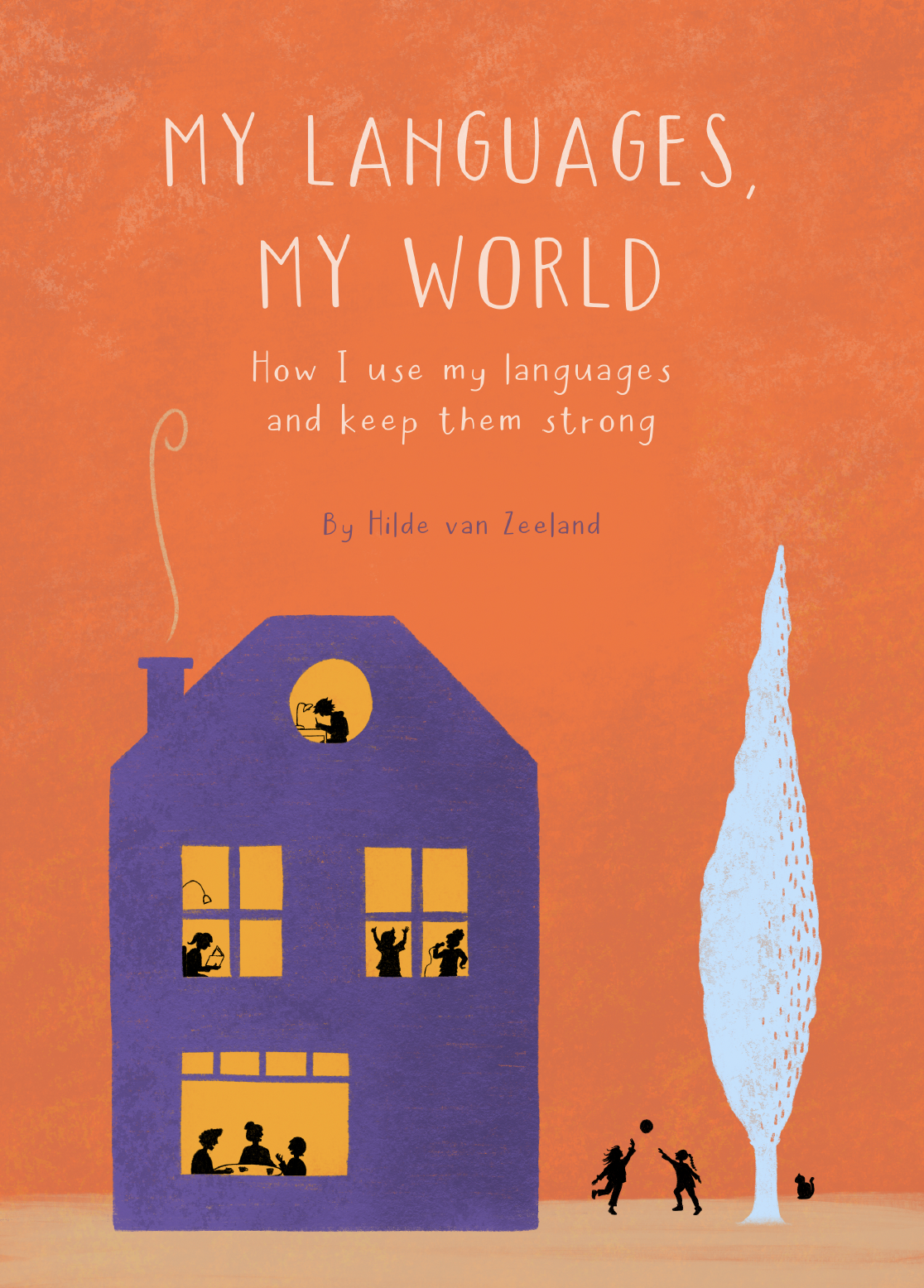
My Languages, My World
A workbook for bilingual and multilingual children to explore their own language landscape. They reflect on when, where, and with whom they speak each language, and set their own language wish for keeping their languages close.
References
[1] Schalley, A. C., & Eisenchlas, S. A. (2022). Parental Input in the Development of Children’s Multilingualism. In A. Stavans & U. Jessner (Eds.), The Cambridge Handbook of Childhood Multilingualism (pp. 278–303). Cambridge: Cambridge University Press.
[2] Slavkov, N. (2017). Family language policy and school language choice: Pathways to bilingualism and multilingualism in a Canadian context. International Journal of Multilingualism, 14(4), 378–400.
[3] Shin, S. (2005). Developing in Two Languages: Korean Children in America. Clevedon: Multilingual Matters.